
Notes from the team.
Things we've learned about running monitoring at scale, incident-response patterns that don't suck, and shipping reliable web properties.

How to choose an uptime monitoring tool in 2026
A buyer's guide that goes beyond the marketing pages — the questions that actually matter when you're comparing uptime tools, and the gotchas the vendors don't advertise.
30-second vs 5-minute checks: does cadence actually matter?
Most "Pro" plans give you 5-minute checks. We default to 30 seconds. Here's the math on why faster checks are worth paying for — and when they're not.

Multi-region monitoring: why a single check isn't enough
A check from one region tells you whether your site is reachable from one region. That's less useful than it sounds. Here's how multi-region confirmation kills false alarms.
SSL certificate expiry: the silent killer
Almost every team has been burned by an expired cert at least once. Here's why it happens, why your renewal automation isn't enough, and how to set up monitoring that actually catches it.
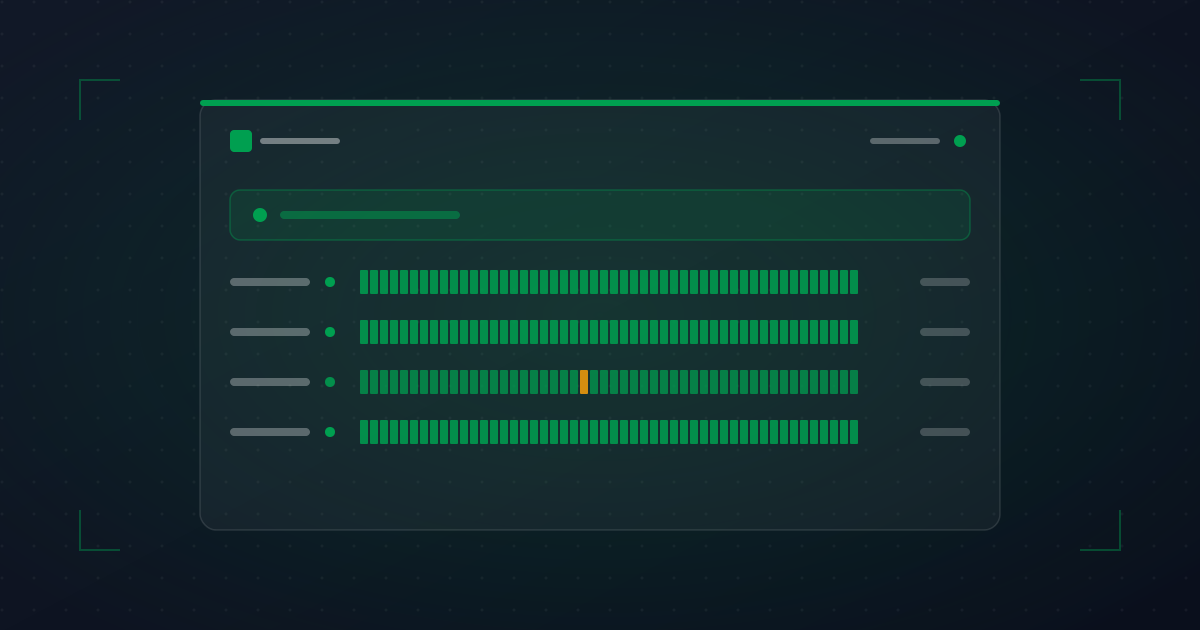
Why every business needs a public status page
Hiding outages doesn't make them disappear. A public status page costs almost nothing to set up and pays for itself the first time something breaks.
Building an on-call rotation that doesn't burn out your team
On-call is the part of operations engineering most likely to make people quit. Here's a pragmatic playbook for rotation structure, escalation, and recovery time.

Cron heartbeat monitoring: catch failed jobs before customers do
Scheduled jobs fail silently more often than any other infrastructure. Heartbeat monitoring is the simple pattern that surfaces them before someone files a ticket.

DNS monitoring: the layer everyone forgets
You can monitor your application perfectly and still take a 30-minute outage from a single DNS misconfiguration. Here's what to watch and why.

Webhook alerts: building custom incident response
Built-in integrations cover the common cases. Webhooks cover everything else. A practical guide to designing webhook handlers that actually help during an incident.
Reducing alert fatigue: practical patterns
When everything is an alert, nothing is. Six patterns we've seen work for cutting alert volume by 60%+ without missing real incidents.